The Writing Desk
Pick a picture, plan it in five boxes, then write. The clock and the word count are handled for you — you just write the story.
Choose today’s prompt
Twenty-four picture sets, in the format her paper uses: three scenes and a theme. Read all three before planning — the marks are in how they connect.
No clock is for an ordinary day — take as long as you like. Exam starts the real timer, for when you want to practise like the actual paper.
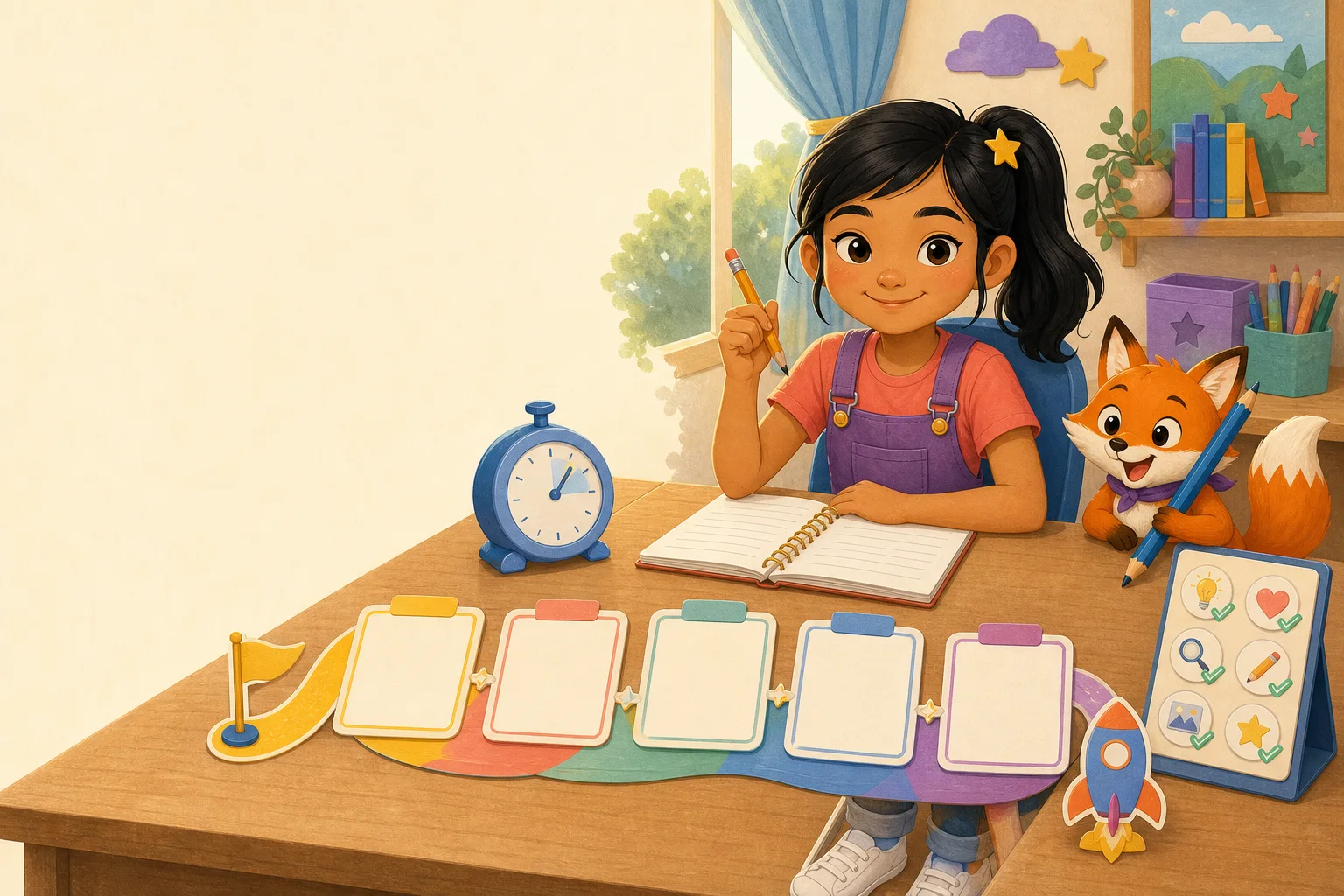
Plan it in five boxes
Three or four words per box. Not sentences — a plan she has to read twice is too long.
Write
Four paragraphs: scene, problem, action, ending. The plan stays visible above the box.
The six-point check
One pass per point, in order. A single vague read-through catches almost nothing.
Words to look at again
Found automatically. Each one is a place a stronger word usually fits — not an error, and not something to replace without reading the sentence.
Her own marks
She marks it against the band table before anyone else does. Self-diagnosis is the skill.
Portfolio
Every composition, dated and marked, kept in order. Progress at this age is invisible week to week and obvious across ten weeks — this is the only place that shows it.